Last visited in May 2024
East Sumba is the largest regency, with the most remote, most hidden, and most mind-blowing places.. and a road to heaven.
WAINGAPU
Waingapu is the capital and the transport hub between Flores and Timor. The city offers a broader range of hotels, and you have more options to rent a vehicle and book tours than in the rest of the island. This is also the place to buy yourself ikats. The only issue is food, which seems to adapt slower to foreign trends and can be a bit of a daily struggle.
The local needs are served here, so you can choose from street vendors, night markets, and warungs. But based on my experience, this region is also one where people don’t pay much attention to how they cook and what they eat: overused palm oil and heavy, sugary taste are the standard. The ongoing development brings new waves and Western-style restaurants, so if you’re not a street nasi goreng person (or don’t eat fish like me), here are the go-to’s to survive (the only problem is the late-ish opening – usually after 11 am):
- Kopi Tebing. My absolute favourite. They’re trying to elevate the region with a modern touch; the snacks are a treat, the coffee is top-notch, and the terrace view is superb.
- Local Three Cafe & Eatery. Another popular place. The food is good, but the service is the worst. The staff act like they’re doing you a favour by taking your order, and then they spend the rest of the time stalking you while you eat (white people are still a rarity here). But, again, the food is good.
- Soemba Cafe & Resto. I’m glad they’re expanding and finally have a resto here after Waitabubak. Same menu, super shy staff, and they deliver exactly what I expect, so within the available options, I’m happy with it.


During my visits, I stayed at Tanto Hotel; simple but comfortable rooms, daily cleaning, fair prices, and a surprisingly good resto. From the menu, I recommend the soto ayam and the cappuccino (it’s just called a latte, lol). They even remembered me on my second visit, which is always nice because it gives you that home away from home feeling.
While Waingapu has its perks, I also had an awful experience. Unlike Balinese, Sumbanese don’t have as many ceremonies, but apparently, I visited during the wedding season. Besides the streets being busy, with roadblocks and police control, a disturbing element of these events is that they kill at least one pig for each feast. Butchering animals like this is a thing (tradition, ritual, call it what you like), but they do it at night. And let me tell you, if it happens under your hotel window, at 10 pm, while you’re already in bed trying to sleep, that’s a fucking terrible experience. I’d never witnessed a slaughtering (I have the least interest), and although it didn’t last long, I had to plug my ears with my head under the pillows if I didn’t want to hear the suffering of that poor animal. You cannot prepare for such events because you never know when and where it’s gonna happen (a wedding, a funeral, a girl moving into the boy’s house, etc.), so just consider yourself lucky if you miss out.
East Sumba is huge, and distances can trick you and Google Maps (no surprise on the latter, it’s already broken). Here are the sights I’ve managed to visit so far, leaving my map still packed with ghost pins, waiting for a revisit:
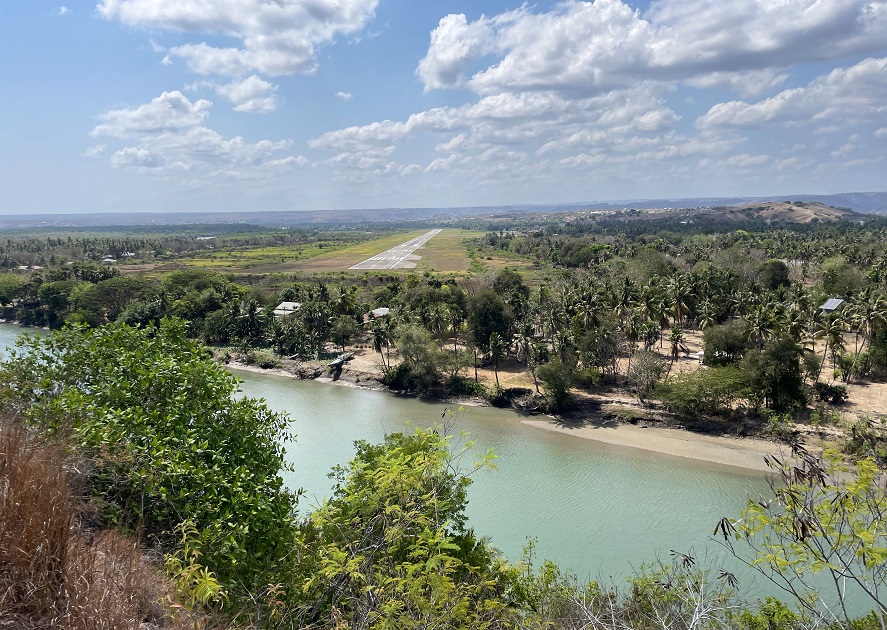
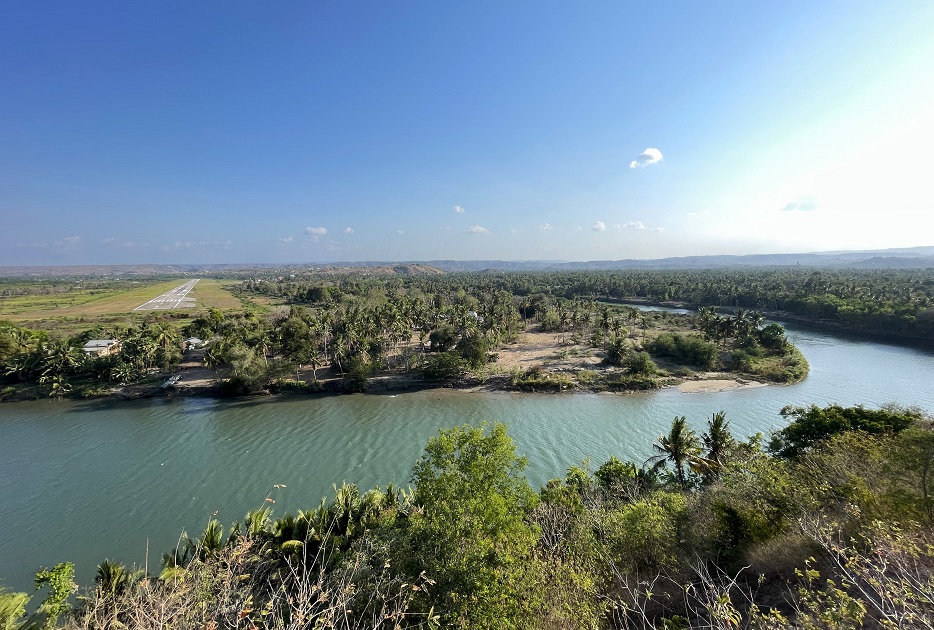
- BUKIT BANDARA PADITA
One of the coolest plane landing spots with an unpredictable timetable. Usually, there are two arrivals and one departure daily, but I recommend checking Flightradar to avoid sitting there for hours waiting for a delayed or cancelled flight. Anyway, the view from the cliff with the river winding into the sea is very photogenic, especially early in the morning and during golden hour.
- PANTAI WALAKIRI
Aka, the dancing trees beach. Another overhyped Instagram spot on Sumba, but just like Wee Kacura (in West Sumba), it was a disappointment. Not only are these dancing mangroves tiny (cute, tho), but all drivers bring their customers at the same time (around 4 pm) to catch the sunset and recreate (or at least try) the exact same shots they’ve seen on social media.

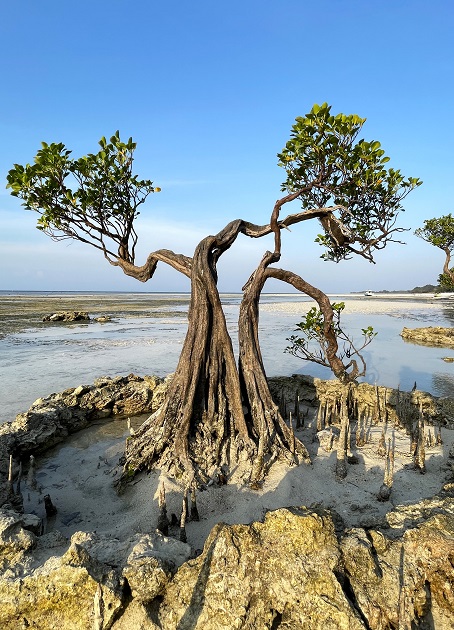


If you still want to visit, choose an off-tourist time, and bring water shoes because the sand is full of starfish and crabs, not to mention the sharp spikes of the mangrove trees, which makes it like walking on a minefield.
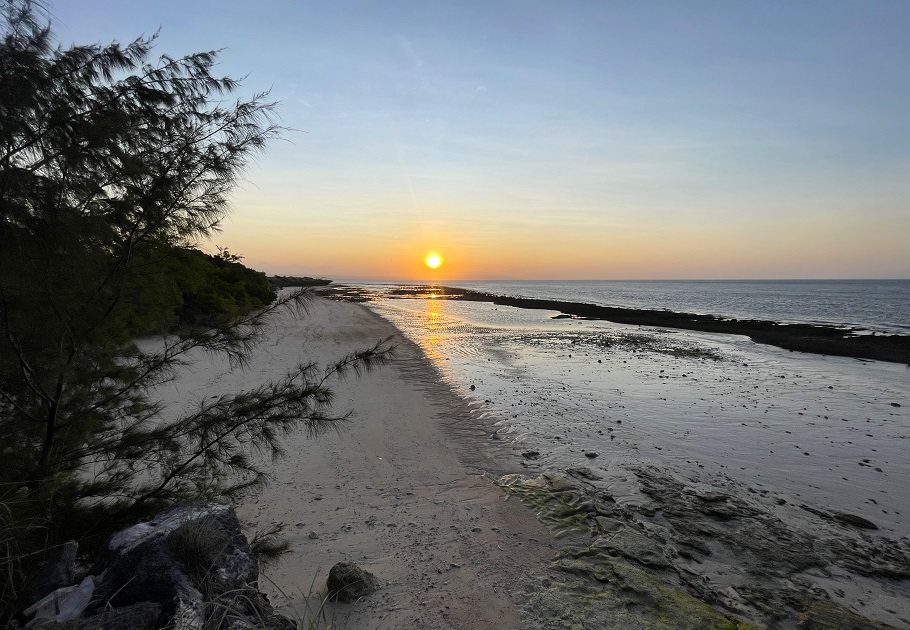
- PANTAI TANJUNG PASIR
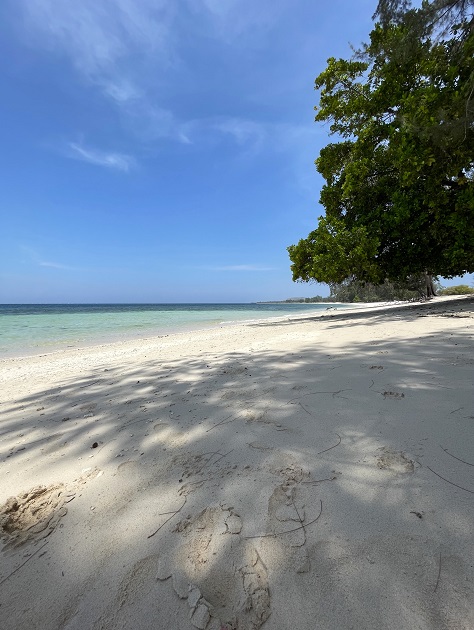
This one is a real gem. The steep white stone dirt road leading down to the shore requires some attention (and skills if you go after rain), but you’ll be rewarded with an abandoned (hidden), gorg white sand private beach, which is also facing sunset. The powsugar colours, all the way from the cliff, are out of this world – this is a feature of Sumba in general, I just can’t get enough of it.


- PANTAI PURU KAMBERA
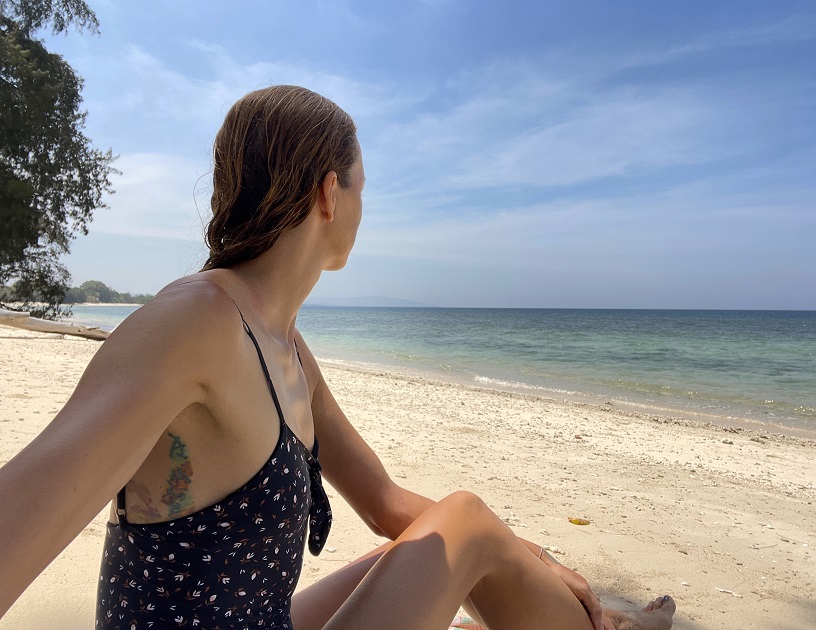
Another lovely beach, conveniently located right next to the flat road, making it super easy to access. You can fully enjoy yourself.. until some nosy locals arrive and start taking unapproved photos of you. There’s also a restaurant (Pondok Wisata Pantai Cemara), which is just perfect for not having to worry about food.
- AIR TERJUN TANGGEDU
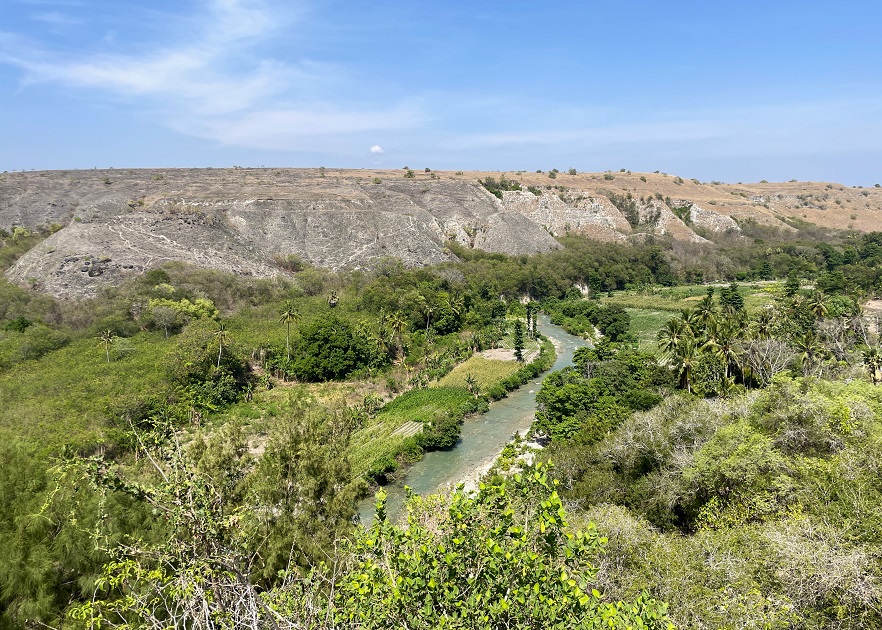
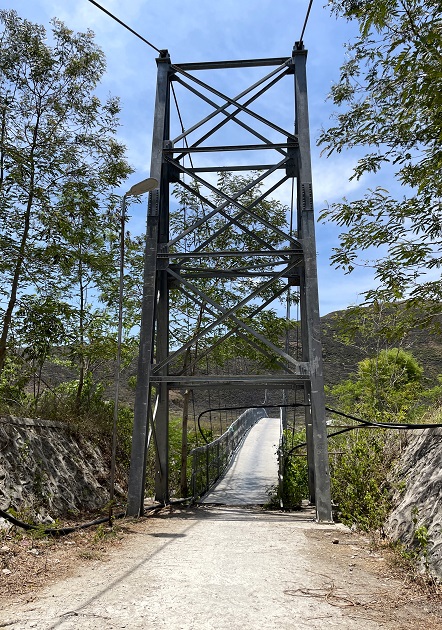
We are coming to the indescribable extraordinaries of East Sumba. First up is Tanggedu waterfall. The road leads through a hilltop savanna, then down to the riverbank (which looks like arriving at an oasis in the desert), to a small bridge (scooters only). This bridge is the entrance point; entry is free before 10 am, after that, a ticket guy will show up. If you arrive by car, you have to park and walk – or if you spot some local boys, they’ll give you a lift for some cash. After passing rice paddies and houses, you’ll reach the parking area, from where follow the sound of the rushing water. Then, let your jaw drop.


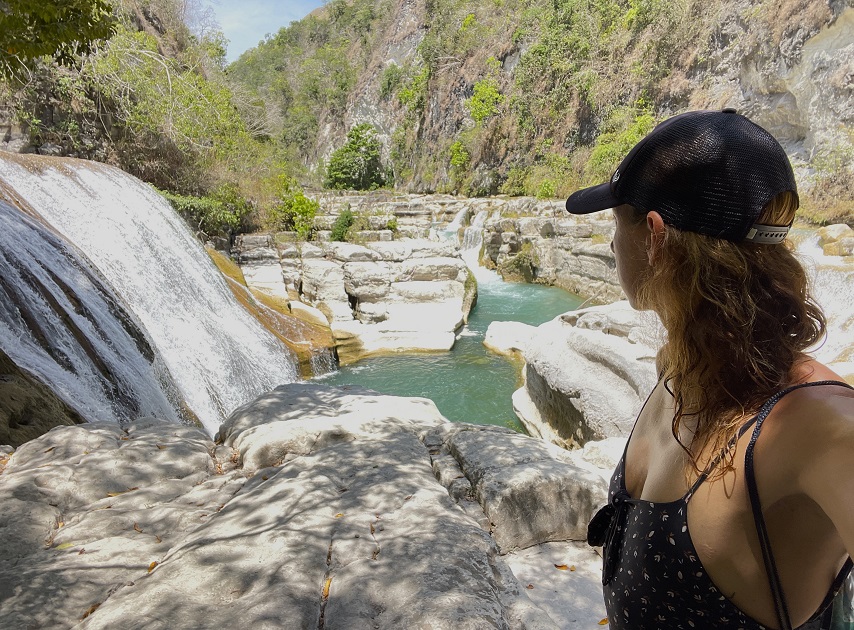
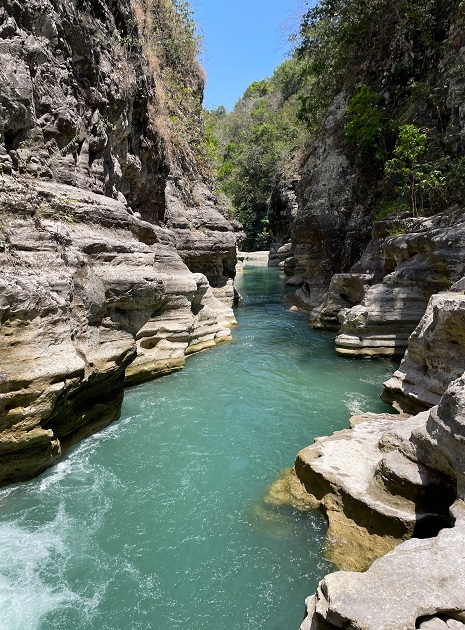
This island is insane. Anyone who preaches about the waterfalls of Bali has never been to Sumba or is just full of bullshit. The Bali falls (I’ve seen a few) are nowhere close to the sites of Sumba – no scams, no trash (or at least not in the water), only the unreal views and colours. In Bali, I usually don’t step in the water because it’s fuck dirty. In Sumba? You have to drag me out of the crystal-clear, refreshing turquoise pools.
I tried to find Air Terjun Menggit Tadula Njangga, which is marked nearby, but when I asked the locals for direction, all they told me was hijau. Hijau means green, and it took some time until I figured that they didn’t mean the colour of the water, but the jungle around it.. and no one felt like cutting a path. So, another time.
- HILIWUKU HILLS
The land of a thousand hills, with a road leading to heaven (or South-North, to be more accurate). The winding mountain road connecting Waingapu with remote parts of East Sumba is incredible. It’s probably the last thing you’d expect in the (still) lesser-known parts of Indonesia, making it even more magical. The good part starts when the road rises to the mountain level; from there, just put on the music and fly (of course, keeping an eye on the road for animals and gravel). The current endpoint is around Tanarara Matawai La Pawu, and I have to admit, it’s never been so good to drive the same road twice (which I usually prefer to avoid).
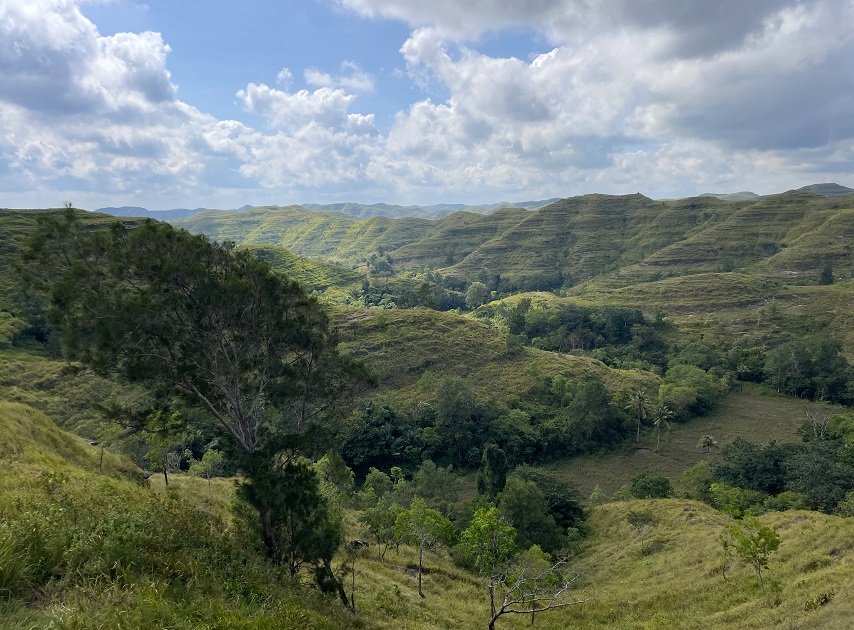
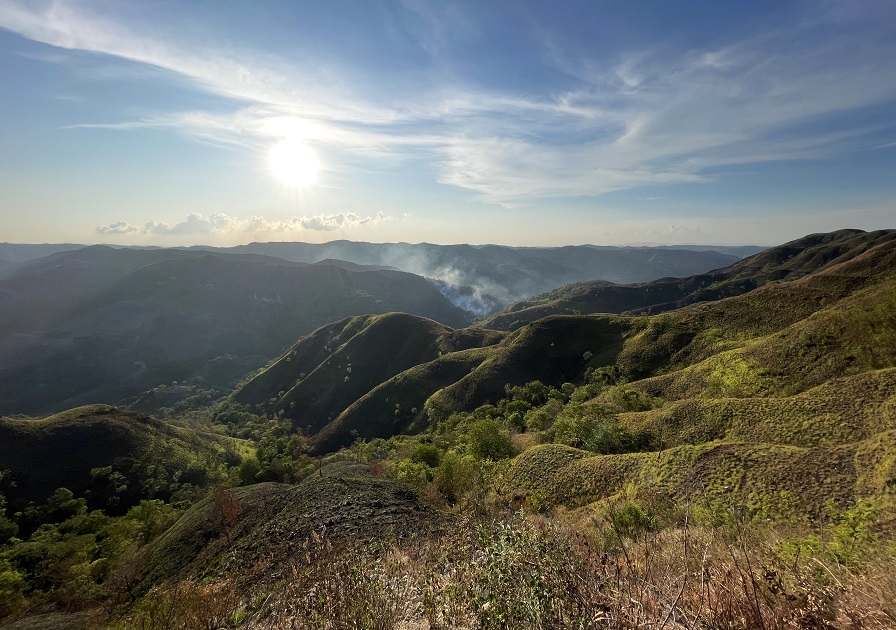
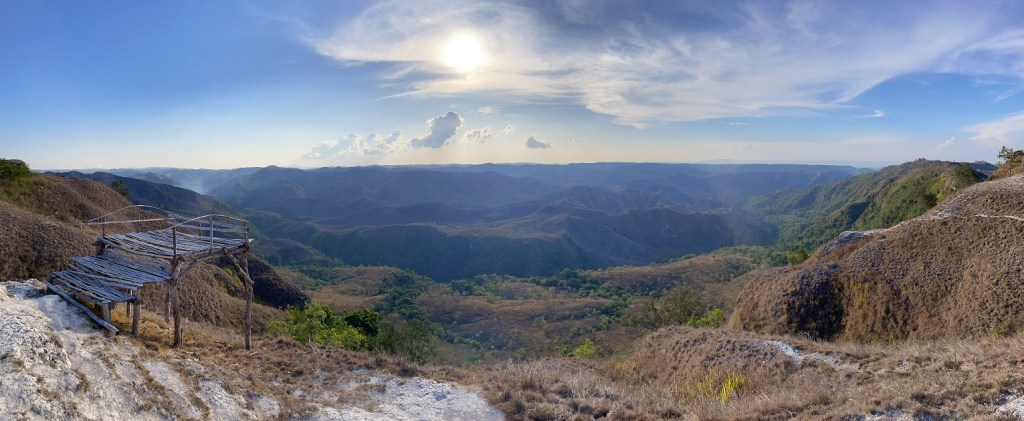
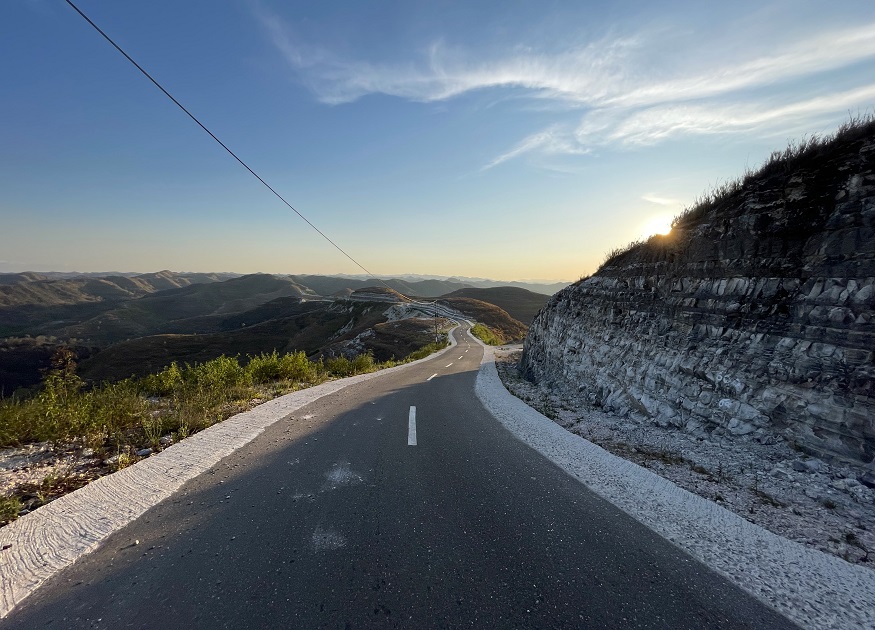

Another thing from the Sumba specialities: bloody lots of flies. Almost like in the OZ outback, only they’re less aggressive. Sumba is an island of horses, so the flies are not. And by the way, although I originate from an OG horse nation, I don’t like horses. I don’t trust them, their teeth freak me out, and as the good ol’ saying goes, there’s no other animal that shits while you’re sitting on it (whoever said this hasn’t seen an elephant.. but you get the point). The only horse I care about is the horsepower, and the Hiliwuku road is crying out for that herd.
I came up here just for the sake of driving – both in the morning (best on Sunday, when everyone is in church) and at sunset. The burning red sun sinking between the multiple layers of the hills in the smokey air must be seen, it’s not enough to be talked about. However, there are 3 reasons why I don’t like to drive in Sumba after sunset:
- Cold and wind. Yes, the crisp mountain air can be a pain on two wheels.. it’s still worth it.
- Pitch black. Literally. Zero light pollution presents an incredible night sky, but from a driving perspective, it’s better to slow down, especially in the bends.
- Incognito locals. Sumbanese have cat vision; they walk and drive in pitch black, without any lights. I don’t know how they see, but it’s tough to see them. So careful!
- AIR TERJUN LAPUTI
The best comes last. The non plus ultra sight I’ve found so far. The Laputi waterfall was on my list since the beginning of my Sumba journey, but it’s one of the spots you don’t randomly drive to on a free afternoon. It requires a day and a 4WD (or a proper dirt bike). In my case, I needed a driver, and this is the only way and recommended for everyone. It takes twice as long to reach the area as Google says, and you really need someone with a slight idea of where he’s going.
Laputi has a waterfall and a lake; you can visit both, but two separate roads lead there (I wouldn’t go for a forest trek). Based on my time (one day), I chose the waterfall and.. I cried. After parking the car, it only took a few steps to arrive at the lower part of the waterfall, which was already cute, and I started feeling the butterflies inside. As we walked and climbed up against the flow, each level of the fall left me speechless. Finally, reaching the top level put me in another state. I. Could. Not. Believe. That. This. Was. Real.
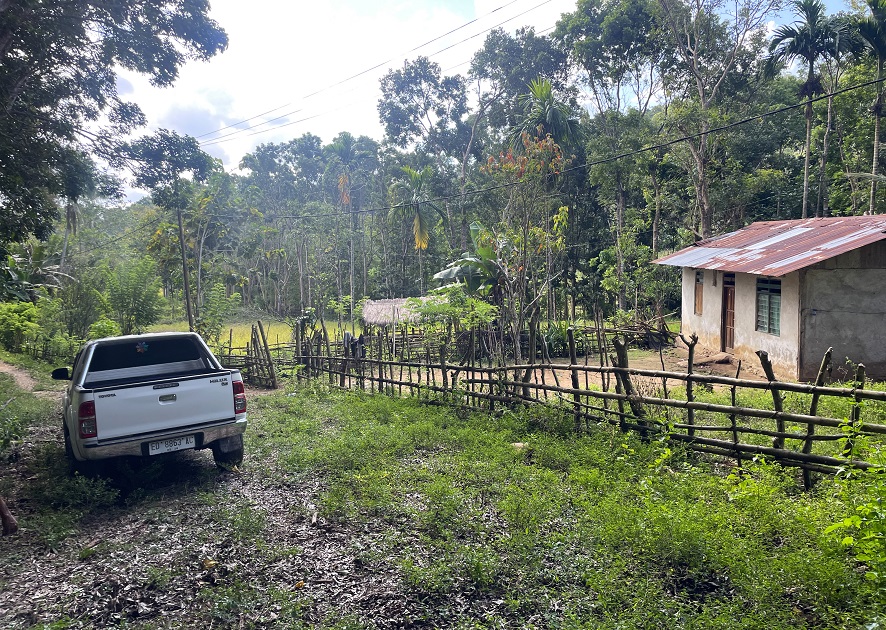

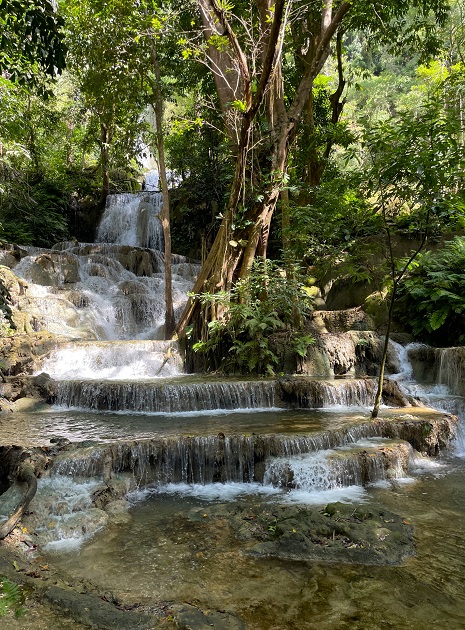
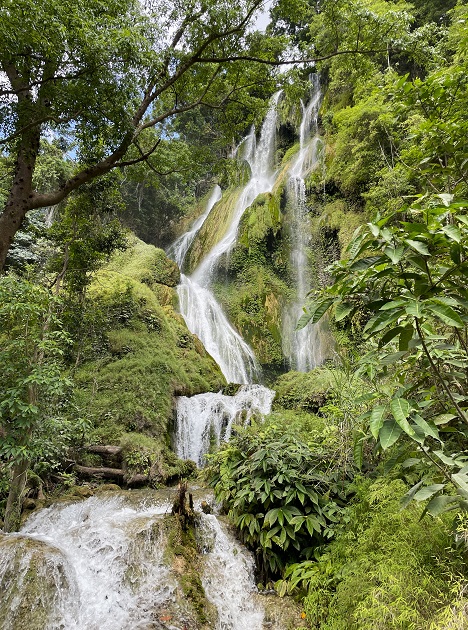
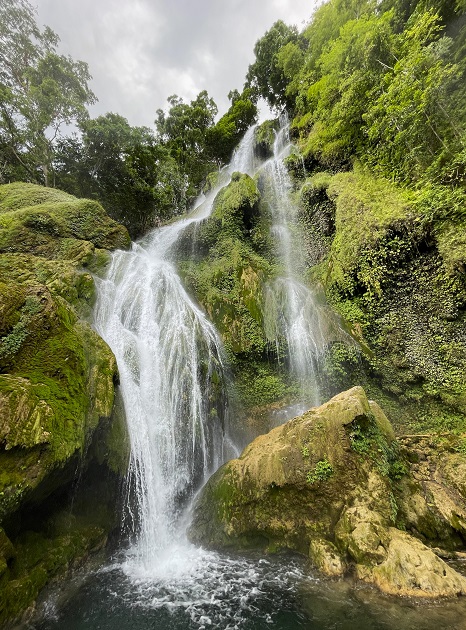
We (my driver and I) were the only ones there, and based on the hijau around, it’s not a busy spot. It felt like finding a diamond hidden deep in the forest – for adventurous eyes only. So much beauty, majesty, serenity.
After taking in everything, I let it settle while sipping a can of Starbucks latte (no comment), then we set off on the next mission of the day..
- PANTAI TARIMBANG
I really had no idea about the travel times, but deffinitely wanted to have some beach time. Tarimbang is a semi-known surf spot with surf camps, but thanks to its remoteness, it’s far from crowded. Approaching to it on the bumpy cliff road, I leaned forward and screamed What the fuuuck!, when I first spotted the bay from the car. Golden sand, buffalos, empty waves, surprisingly no sandflies.. I think this is the concise description of paradise. Excellent place to spend your lunch break and siesta.
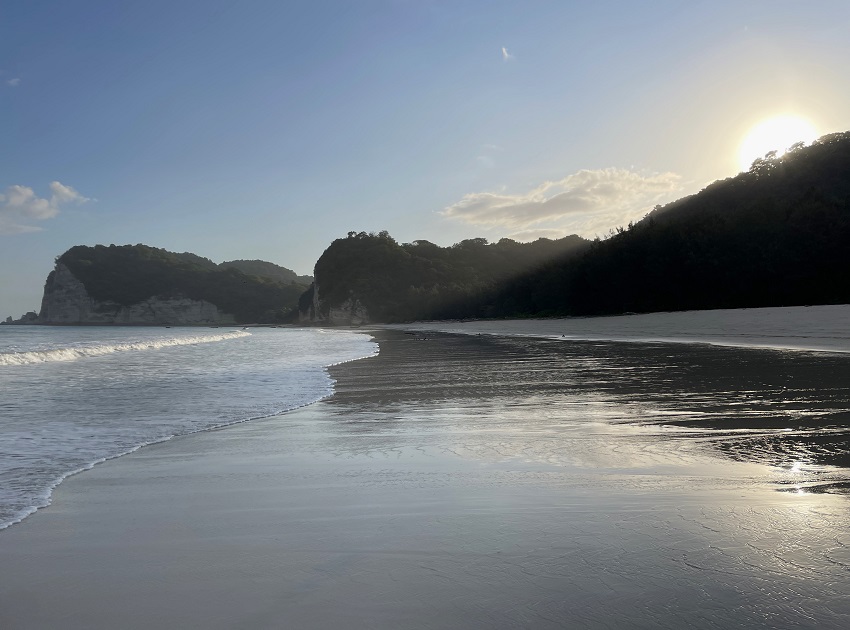
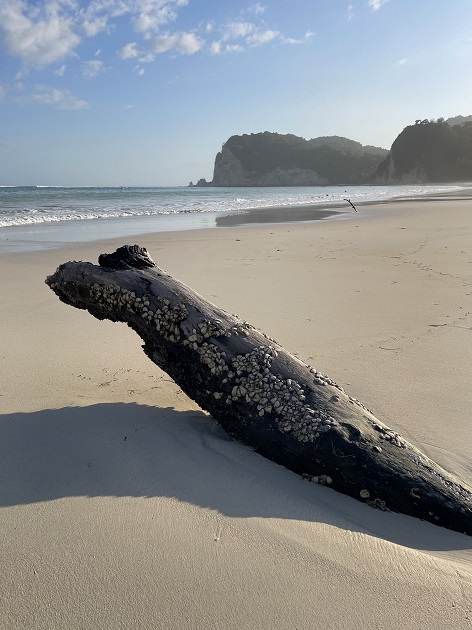
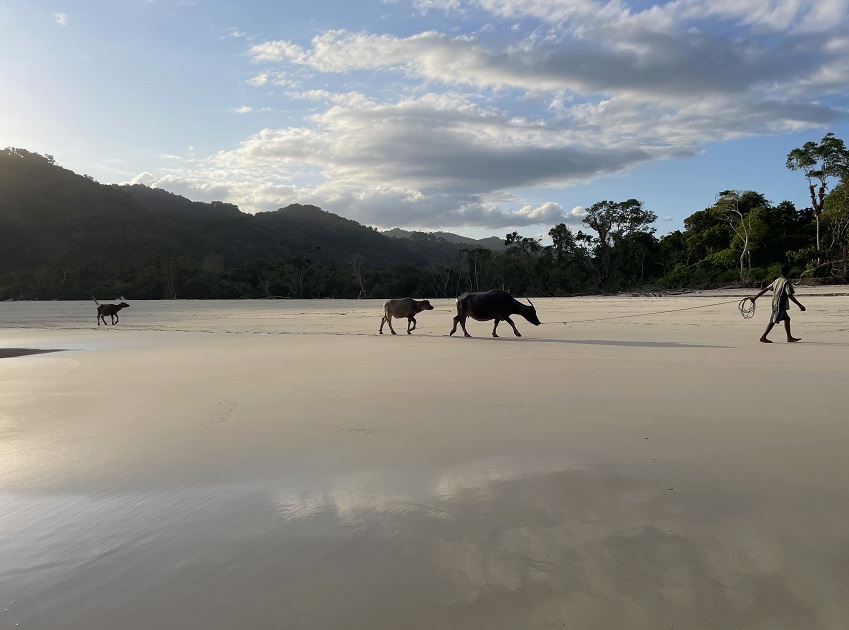
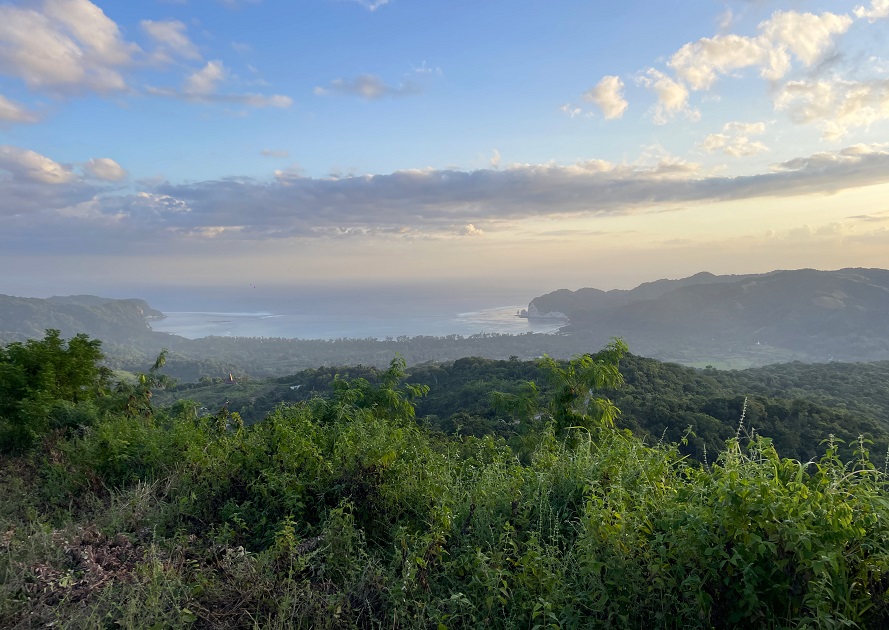
But as the sun was getting closer to the horizon, we had to leave because I didn’t want to make my driver suffer more than necessary on the road in the darkness (and even though he had the steering wheel, I was mentally driving too).
In East Sumba, everything is extremely far. Exploring even the well-mapped sights takes time. There’s no road network – mostly just some dirt trails built for the locals – but if you take on the quest and put in effort, time, and money (day trips cost around 1.2-2 million IDR), you’ll uncover literal hidden gems. As for now, it’s a bit of a suffering, but real discovery has never been a paved path. Sumba is unique, and if you make it there before the development finds its way, you’ll have a once-in-a-lifetime experience (after that, everything will be destroyed by mass tourism).
Also, getting a glimpse of the very simple life of the mountain people is thought-provoking. We usually think in a first-world mindset, but what kind of world do they live in? The contrast is staggering and I’m not convinced we live in the better world.
I feel fortunate to witness this place in its kinda in-between state when it’s already accessible to outsiders but not entirely sold out yet.
 The Flux in PARADISE
Comment