Let’s call this a teaser rather than a complete guide because Biak has more treasures than I first thought and definitely needs more than three days to explore the largest island of the small archipelago in Cenderawasih Bay.
What I can tell for sure is that Papua is something else. And Biak takes this uniqueness to the next level. What I cannot tell yet is how much more it can blow my mind. Pulau Biak lies only one degree south of the equator. Due to this geographical location, the island is the focus of constant military interest (it’s strategically optimal for missile launches), and consequently has a sad history. But most importantly (because I prefer withdrawing from wars and people’s stupidity), it has a very different climate, incredible underwater life, and probably the safest overland life in Papua.
USEFUL THINGS TO KNOW
I hate the term hidden gem because 99% of the time, it is bull (only an overused label for tourist traps). However, Biak somehow falls into that 1% and could not be summed up better than hidden paradise. It’s hard to find any info online, and the bits available are mostly outdated (everything changes, especially post-Covid). Not finding much data feels like time travel back in time.. when there was no internet, only paper maps and some printed books. But lucky you, I’m here to share what the T is over there, so you don’t have to run to the library or antique bookstores.
GETTING THERE
After the American invasion, there were direct flights from the US to Biak. But then the Indonesian government decided to turn Bali into a holiday island instead (it’s also closer to Jakarta, I’d add), so slowly but steadily, Biak fell off the radar. Honestly, I’m happy about this because it shows more clearly than the sun how greed and tourism have destroyed Bali. Hopefully, the Papuan islands can remain untouched for a while (even if the odds are against it).
Anyhow. The most obvious way to get here is by domestic flights from Jakarta, Makassar, or Jayapua (plus the connection where you are departing from). The less obvious way is the Pelni boat, which takes about a week (from Bali), so better forget about it. Spoiler alert: it won’t be super quick (nor cheap), even in flight. From Bali, it can take 6 to 20 hours (without delays) – depending on how good you are at booking flight tickets and if you are willing to fly with Sriwijaya.
GETTING AROUND
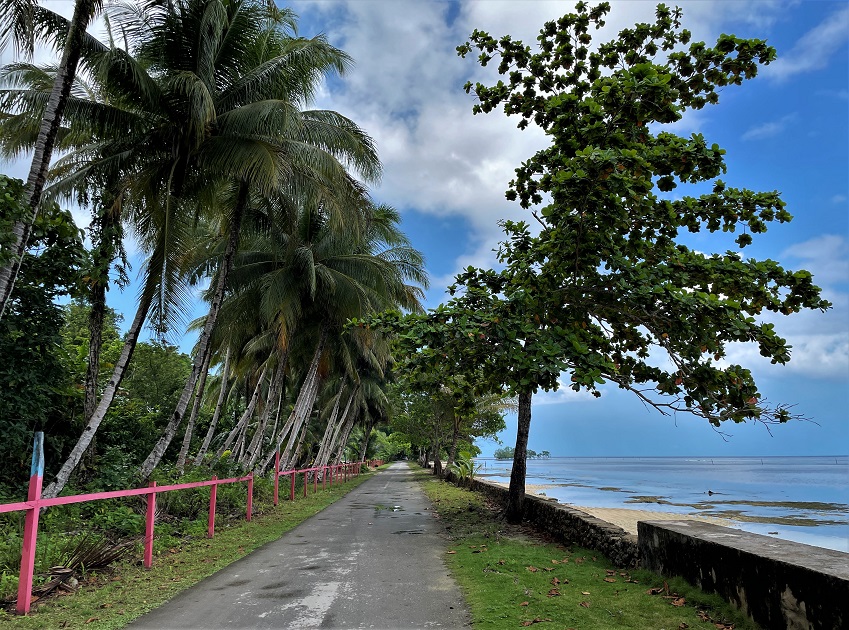
The island is undergoing some developments, including brand-new roads. I bet some money-oriented interests are in the background because they don’t make roads just like that in the middle of nowhere without intention. Whatever it is, the result is pretty amazing – it felt like flying.
You can rent a car (with a guide/driver) or, as I usually recommend, a bike. We rented ours from Fanila Rental. I don’t know if there are other rentals in the area, but I recommend this guy. The price is 100k IDR/day (150k if you also go to the Supiori area), the scooters are in good condition, and you can book them in advance on WhatsApp. I was amazed as I expected a much higher price and crap hogs.
SLEEPING SOMEWHERE
Well, accommodation is the tricky one. There are many hotels, but none are worth recommending. They are generally below basic standards, full of mould and cockroaches, and in a usual rundown condition for about 400k IDR/night. The only acceptable places are Asana (right next to the airport and a mosque, so it doesn’t seem very relaxing) and Swissbel (super expensive and still average, including the restaurant). Everything can’t be perfect, balance in life, blah blah blah.. you pay the price of paradise with the accommodation.
WHAT ELSE
- Upon arrival, drivers (car and bike) await at the airport exit. The fare seems alright, but it’s always better to clarify the destination and the price in advance.
- There are many ATMs, so withdrawing cash is not a problem. You can also pay by card in some places, but they may charge you an extra 2-3%.
- The island has two Pertamina stations, but petrol is life, so it can be found everywhere (at smaller stations, at pom minis, or in bottles). For a bottle, the standard price is 15k IDR.
- Papuans are Christians, and this is the main religion here (of course, Indo-Muslims have their mosques as well).
I liked the vibe in the town and had no issues walking around (even alone), so I’d say it’s safe. Despite their bloody smiles, Papuans are shy. They’ve seen here white people before, so we’re not complete aliens. They are friendly and not pushy at all (when they approached us to take a selfie, they did it kindly). Of course, I don’t understand what they talk or comment about us, but honestly, I don’t even care as long as everyone goes their own way in peace. And let me add that they might be brash and have dirty mouths, but you as a tourist better be respectful – this is not the place where you go shopping in your bikinis.
During our stay, kids jammed on drums next to the market every night. Maybe they were practicing for the next day’s event, maybe every evening is spent like this, but in any case, my drum&bass heart loved the beats. I also spotted a billiard parlour on the main street, a typical warehouse behind metal accordion doors, which only opens at night. If you feel like engaging in activities (playing football with the kids, playing music, or being interested in trying pinang), you are more than welcome.
THE SOUTH
The first thing you’ll experience is the heat in your face right when you step off the plane. It feels like you’re about to have an instant heart attack or a brain meltdown. It’s really intense, but you’ll get used to it in a day or two.
The second thing is that life starts at 10 am. No kidding. I smiled every day that the main street is all quiet at 9:55 but busy with traffic at 10:00. Hadi Supermarket (which is well stocked from essentials to booze) and, of course, markets and street food open earlier, but if you want to start your day with a decent breakfast, you’ll have to wait until 10. (Swissbell has an all-you-can-eat breakfast for 150k/person, but it’s just intermediate for the price.)
COFFEE and MEAL
Koffie Kitong is located in the mall building and offers tasty food (the club sandwich is delish), huge portions, and very good coffee. Open from 10 am to 10 pm.
99 Restoran is the other place to go, with a Chinese and Indo menu, huge portions, and incredible staff. Here’s the proof: The first night, we went there with eight people, and shame on us, we ordered in chaos (drinks, food, then more drinks, then change, then share, then more food.. you can imagine), and asked for a split bill. The staff not only brought all the food and drinks without repeating the order but handed each of us the correct bill without asking. I couldn’t believe it. This has never ever happened in Bali (there are always errors, you have to check with them, and then it’s still not right). I don’t know how the Papuan girls did it, but huge respect! On the second night, we were asked to order one by one, which was a very fair request, but I was impressed with this place. Not sure about opening hours, but until 10 pm.
My only daily struggle was coffee. Damn people, why do you drink coffee at midnight and not in the morning?! I’d rather not drink coffee than some crap, so I always had to wait for them to open.. which is a bit late for my normal biorhythm. Aside from Koffie Kitong, my other coffee spot was Kalea Coffee (a small, narrow cage on the corner next to Swissbell). The guy makes a supergood ice latte for only 20k IDR. Open from 10 am to midnight.
Karang Panas Kopi is also an option for coffee and dinner, but opening hours are pretty uncertain (around 6 pm to midnight).
If you want to get some Papuan coffee as a souvenir, you can have it at Arvac Cafe. Unfortunately, they don’t have a shop in town but have a fine selection at the airport. (I also found some roasteries on the map and was keen to test them, but none were open when I visited.)
DAY TRIPPING
Biak is not a big island; from the town, every spot can be reached in max. of 2 hours drive. Before visiting a new place, I pin my interests on the map, and it’s always fifty-fifty when I hunt them down. I mean, not everything looks as it seems on the internet. No secret I’m spoiled with astonishing places in Indonesia, so the standards are high. This time, I checked the following places on Biak, and as crazy as it sounds, they 100% met my expectations.
Pantai Samber. Sunday, picnic, reggae. (Papuans have better music taste than Indos. Period.) Maybe I just arrived on the right day and at the right time, but the vibe got me immediately.
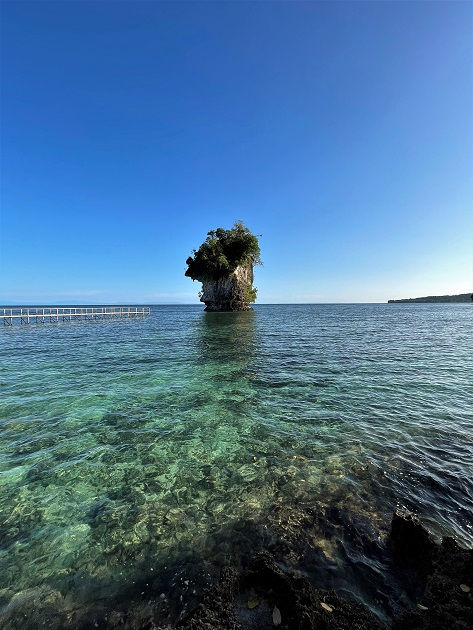
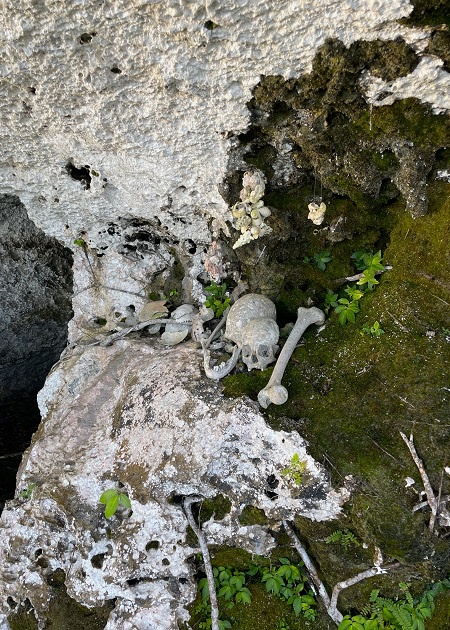
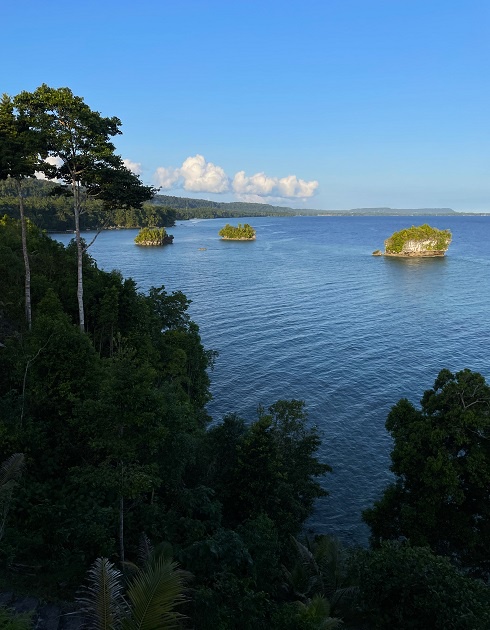
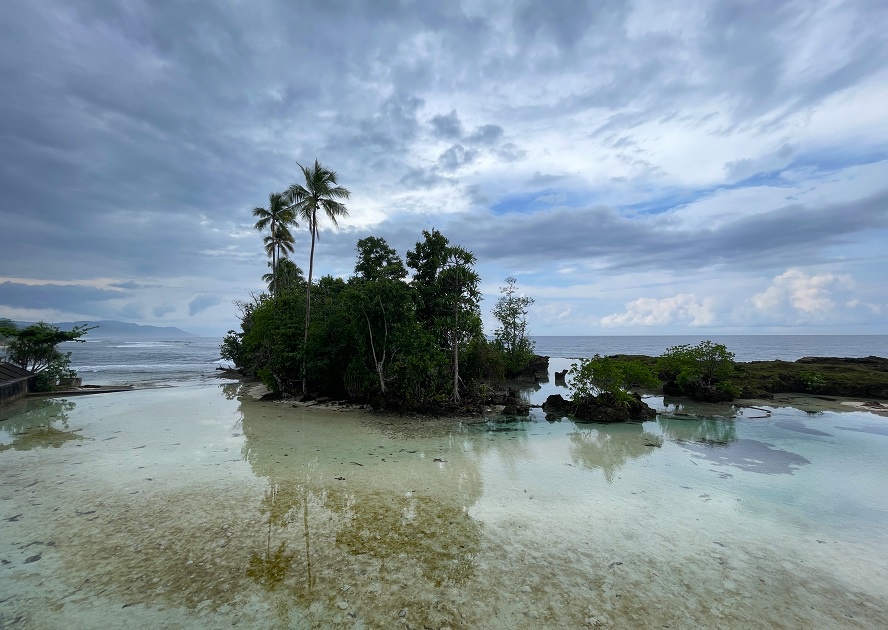
Kuburan Tua Padwa. 20k IDR for entrance, some steep stairs, and an unexpected bay view. I didn’t know exactly why I was going down there, just wanted to check it out. The million-layered green of the lush jungle, the breeze playing shadow game in the late afternoon sunlight, and a single limestone rock surrounded by gently rippling water left me in awe. I had only been on the island for 6 hours and was in love. Oh, and there are skulls and bones in the rock wall – apparently, this place was a cemetery.
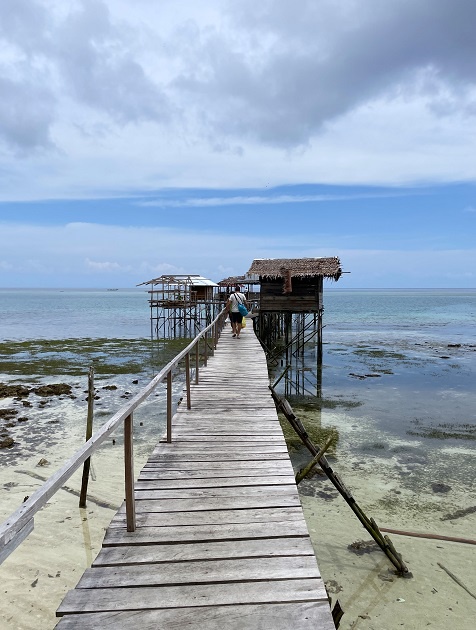
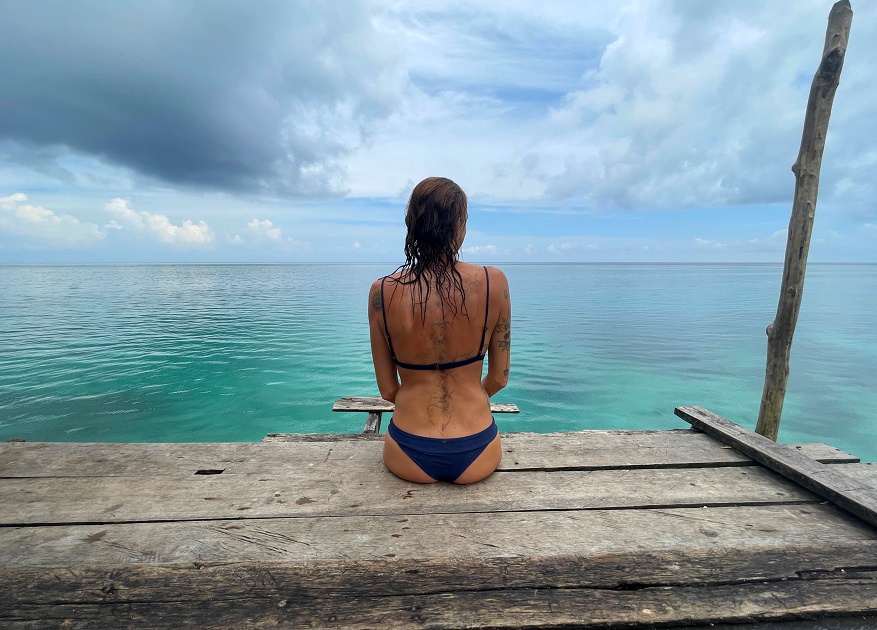
Snudi Paradise. Biak is the island of piers, and Snudi Paradise is number one (5k IDR for entrance). It’s simply perfect; equipped with a barbie and electricity, you can easily spend a whole day here indulging yourself in the view and jumping in the water (recommended at high tide only).
Tanjung Sarweri. 15k IDR for entrance, great cliff view of the Raja Tiga, sunset and chill. You can stop just to look around, but this place is best for spending time and food with friends.
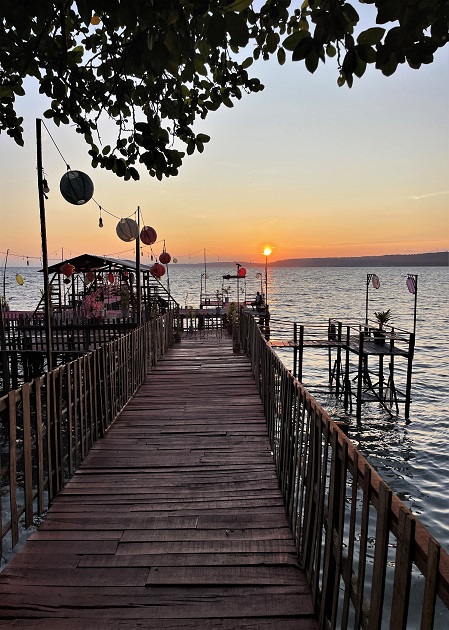
Jembatan Lestari Waransnus. Another pier to the west, making it a perfect sunset spot. If you feel lost on the village roads, just ask someone where the shore is, and they’ll point you in the right direction. The water doesn’t look inviting for swimming, but the atmosphere is cute and photogenic.
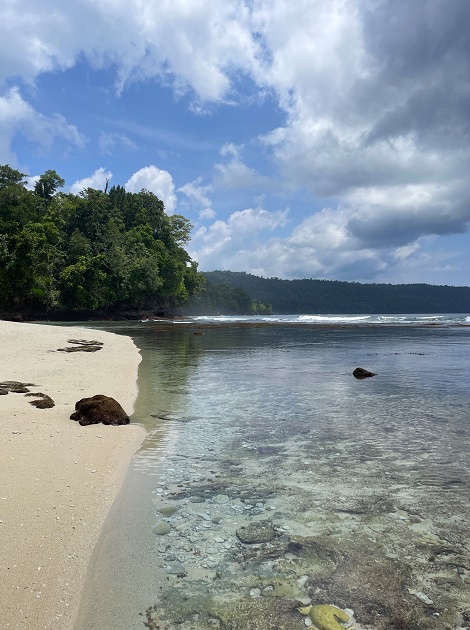
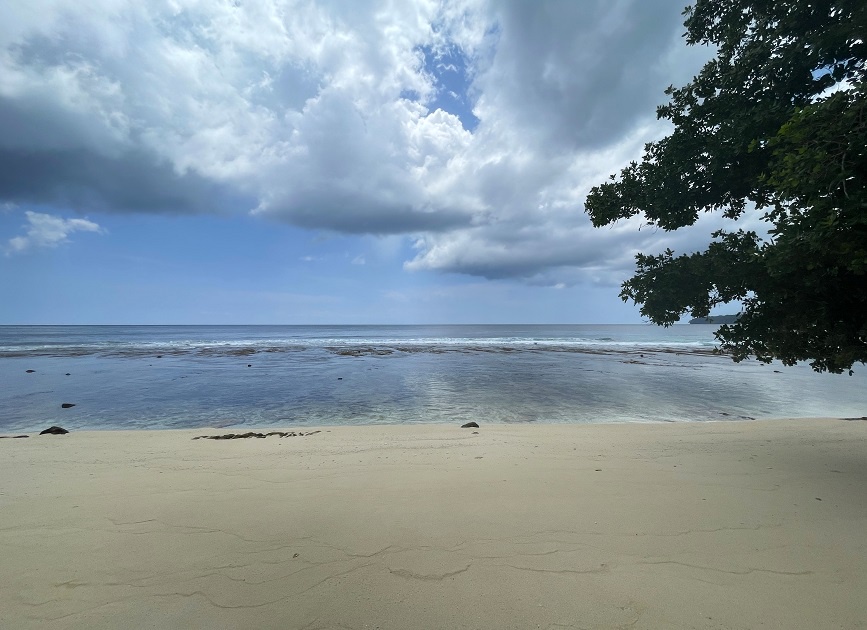
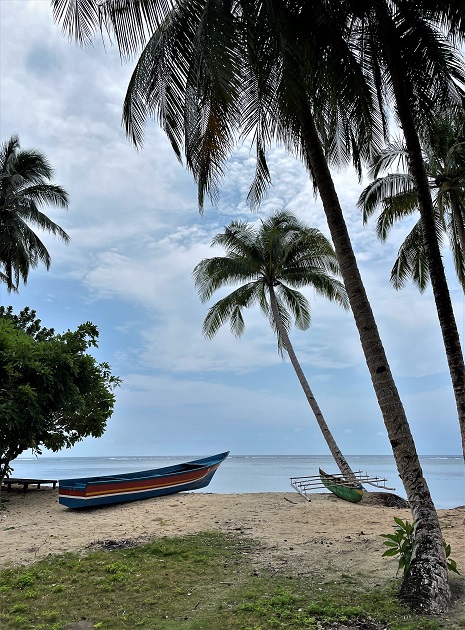
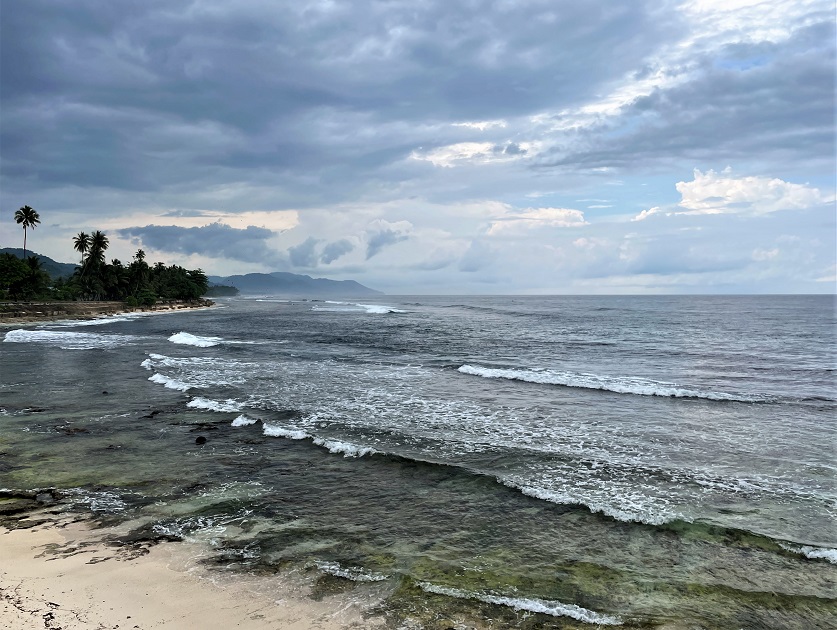
To the east of the town are the most fabulous beaches. The entire coastline is a beach interrupted by mangroves or small forests and rocks. I only stopped by Pantai Bosnik, Pantai Segara Indah, Pantai Soryar, and at the most eastern point of the island, Pantai Barari. Unfortunately, skipped the most famous (with good reason) Pantai Anggopi due to the rain.
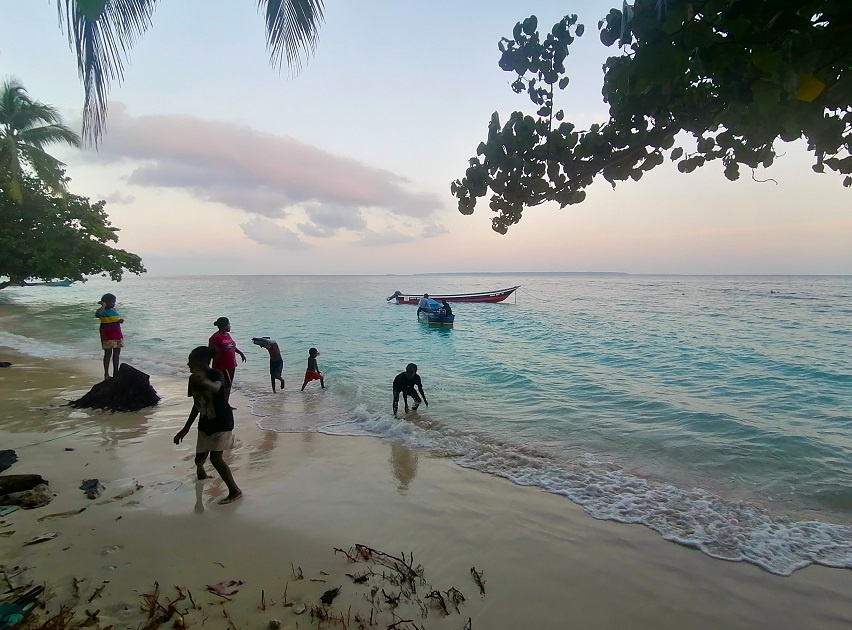
White sand, crystal clear, amazingly refreshing water, and, of course, some locals wondering how you got there. We also got a plate of banana fritters (super yummy) once.. because poor white people looked so hungry, they had to feed us.
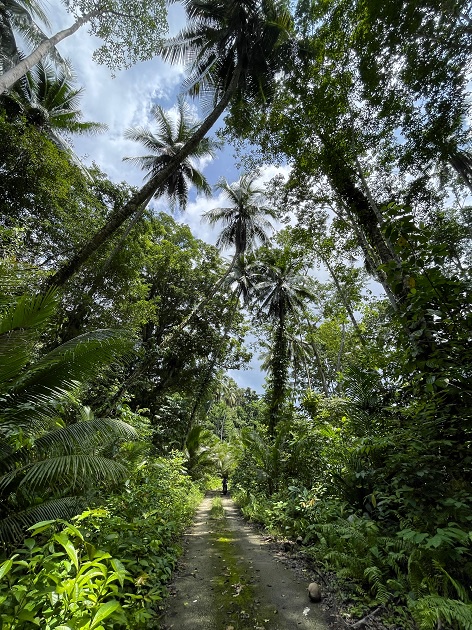
The most well-known tourist attraction, Telaga Biru, is north of the town. 20k IDR for entrance, but only if a guy sits at the entrance (otherwise, it’s free). A brand new road leads there, undulating over the hills. Fun and easy drive.. until the last part, where a ca. 50 m section of the asphalt is missing. Still doable, but you’ll need to be careful to steer your bike or car down (and up again). Then park under the trees and walk about 5 minutes to the lake. Easy.
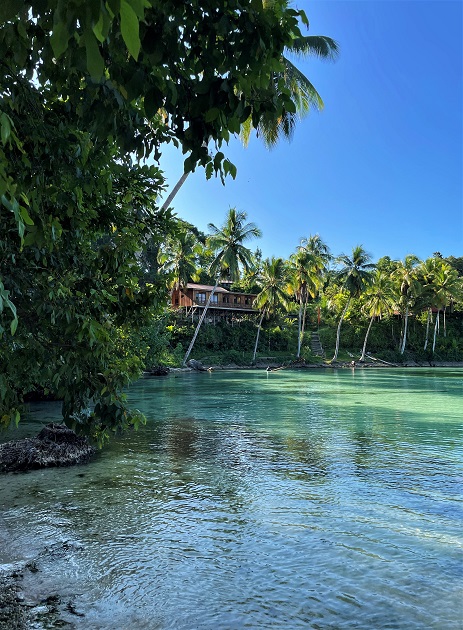
The blue of the lake itself looks out of this world. However, I was more impressed by the beach right next to it. Pantai Samares reminds me of Lombok and Manokwari, and gosh, the serenity in the morning sunshine and the birds chirping among the palm trees touched my heart.





THE NORTH
Supiori is technically another island, separated from Biak only by a river channel and connected by a bridge. It doesn’t receive as much support in terms of development; once you arrive at Sorendiweri and head south on the Supiori side, the roads turn from heaven to hell. I wanted to reach Korido but turned back after 30 minutes of driving. It was a pain in the ass, and considering I was sitting on the scooter all day, then still had to drive back to Kota Biak (which is 3 hours from Korido), I dropped the idea. I’m not sure what you can find here besides the wild jungle, a waterfall, and a few small villages, but probably some sites are only or better accessible by boat.
Leaving Kota Biak, the area is sparsely populated, and there’s not much for tourists to do there – just enjoy the perfect roads and stop for gorg views and selfies with the locals. Sorendiweri is the main town in the north, where you can get petrol, groceries, and food at the local warungs (pretty good and cheap).
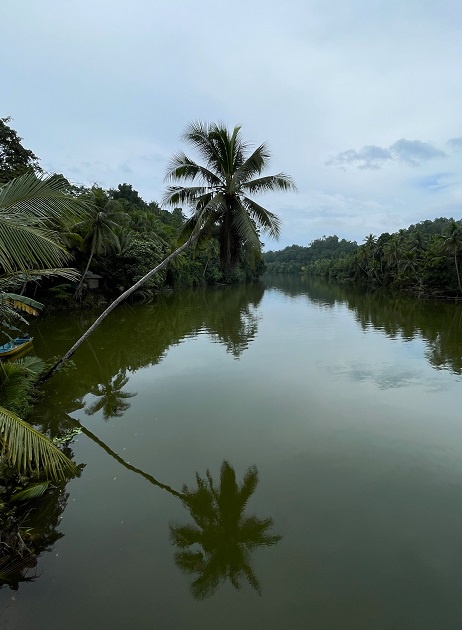
If you don’t cross to Supiori, follow the road on the Biak side to reach stunning spots (actually, you can drive in a big circle back to Kota Biak). The north has a colourful beach village life, perfect turquoise water, reefs, and pigs.
Pantai Bondifuar. A long stretch of white sand beach, palm trees, curious kids, and crystal-clear water (perfect for snorkelling).
Tanjung Saruri. I consider it my most favourite spot in Biak. I arrived there after the rain, which added to the atmosphere and made my jaw drop.
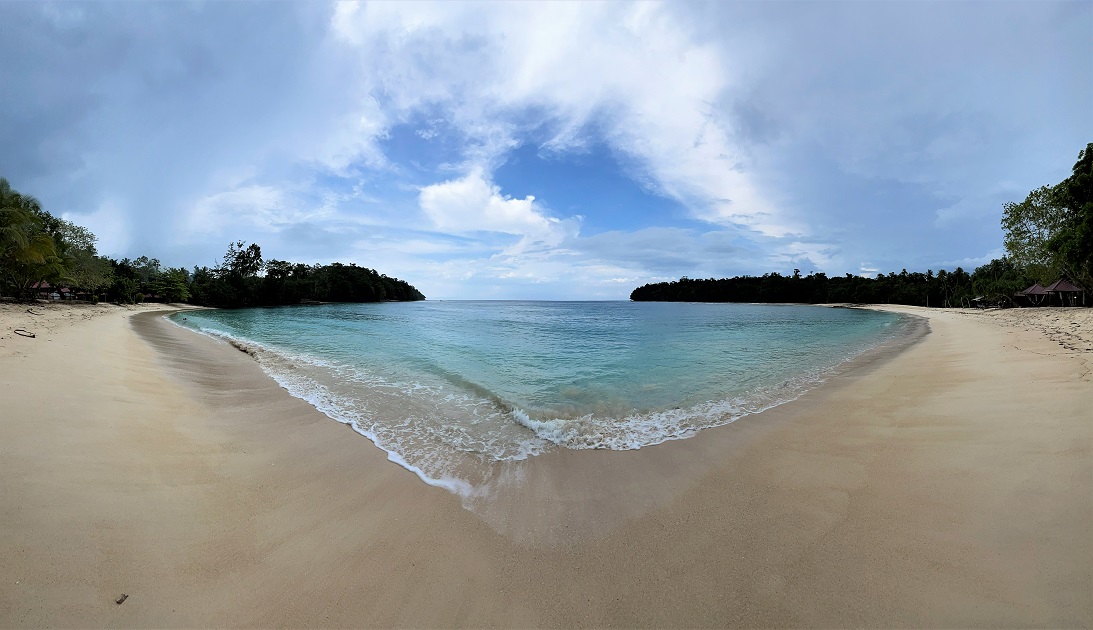
Pantai Wari. This beach is everything you’re looking for for a perfect beach day. Spacious but sheltered bay, soft sand, turquoise rippling water, and tranquillity.
This time, I only had three days. I missed many beaches, a trip to the Padaido Islands, and chasing waterfalls (the good ones need rain, and a guide to lead you because there are no beaten paths with signs). Biak is also famous for its dive sites, mangrove forest walks (there are also restoration projects), and water caves.
Too little time, too much to do. But.. I learned that Biak is a perfect destination for a slow life. It’s not about rushing from place to place with your checklist; it’s about enjoying all the scenery, which you can only do by spending enough time there. And it doesn’t matter whether you’re trekking in the jungle, sunbathing on the beach, or picnicking at sunset. Just calm the fuck down and be present. We are so busy in our minds, but this island teaches us how to appreciate life and enjoy simple pleasures. It doesn’t have to be big to be good.


 The Flux in PARADISE
Comment