Manado, the capital of North Sulawesi, is a real melting point of cultures but just another big Indonesian city with little to offer the average traveller. You’ll only come here because it’s the jump-off point to more amazing places.
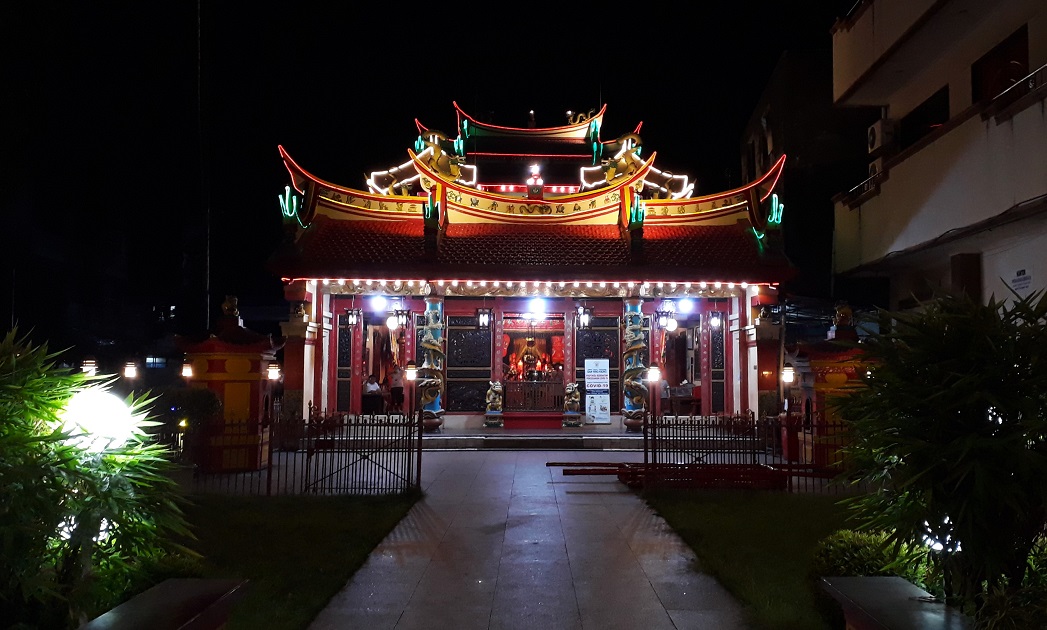
In Manado City, I can only recommend trying the best mie ayam and walking around Chinatown (the city has a great Chinese influence). There are a few shopping malls and cafés, but you’ll find primarily local restaurants and street food (Covid-times limit the options). The real deal is outside of Manado. Since I had a bigger mission, I only spent a few days exploring the area.

BUNAKEN
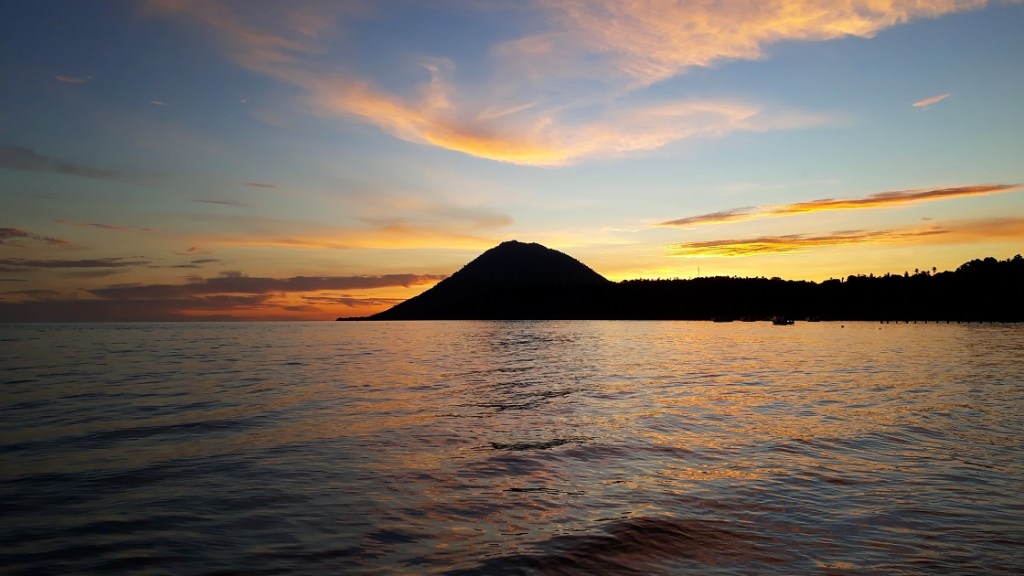
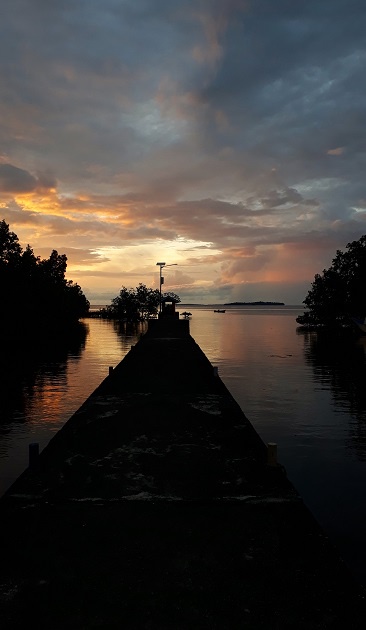
Bunaken is one of the most extraordinary places I’ve ever landed on. My arrival was very random; a friend recommended this tiny island, so I thought, why not start my North Sulawesi exploration here. You can reach the island from Bahowo Mangrowe Park (by local boat) or Manado City (by public boat). I called a Grab at the airport and went straight to the pier in Bahowo where a boat sent by my accommodation picked me up. In this sunset:

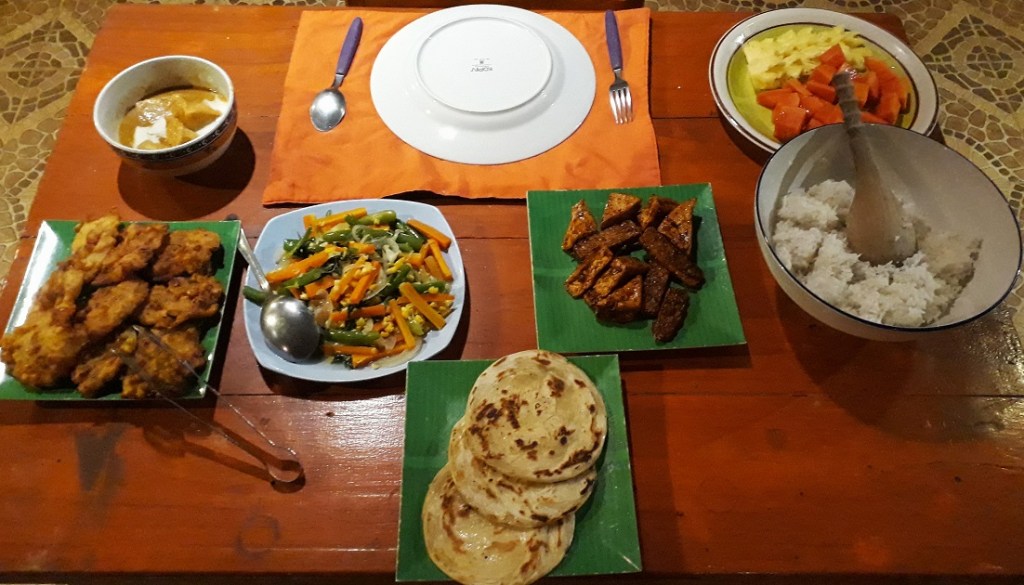
I don’t know if any arrival could be more epic than this. I stayed at Panorama Backpackers. Since I was the only guest, it felt more like hanging out with locals. The room was alright, but the food (breakfast and dinner) was outstanding and delicious.
Bunaken is famous for its diving spots and is called the turtle city. I don’t trust these names because they are sometimes misleading. But not this one. I’m a newbie to open water and snorkelling alone. However, I had to challenge myself and couldn’t have found a better place. One of the specialties of Bunaken is that you grab your mask and fins, walk in the water, and after 200 m, you are in the deep blue. From there, you don’t need to do anything; just lay on the current and let yourself drift while the underwater world blows you away.
The corals are incredibly colourful, and so are the fish, but that just sets the ambiance. The reason you need to come here is the large number of sea turtles living in the reef. At most dive sites, the chances of seeing turtles are always fifty-fifty. Here, luck doesn’t play a role – turtles are guaranteed. And I’m not talking about one or two. At first, I was worried if I would be lucky enough to see one, but after 5 minutes, a giant green turtle appeared directly in front of me from a hole in the coral wall, and all my doubts were dispelled. I also had a magical moment (and regret of my life not having a proper camera) when floating above the deep blue 10 turtles (of different sizes) spiraled to the surface around me. It felt like a dream. They came to check on me but didn’t care much, allowing us to coexist for minutes. This is pure happiness; I was overjoyed and couldn’t stop smiling all day.
TOMOHON
Tomohon is a popular getaway destination for a reason (I’m certainly not talking about the extreme market!); if you’re tired of the city, you can find the perfect relaxation here in the mountains.
I stayed at Jhoanie Hotel because I’d been driving a lot beforehand, it was my birthday, and I felt like treating myself to a more comfortable room than usual. The perk of this hotel is the view. In town, I recommend visiting the Ekayana Pagoda and eating at Grazie á Cafe (the only vegetarian I could find).
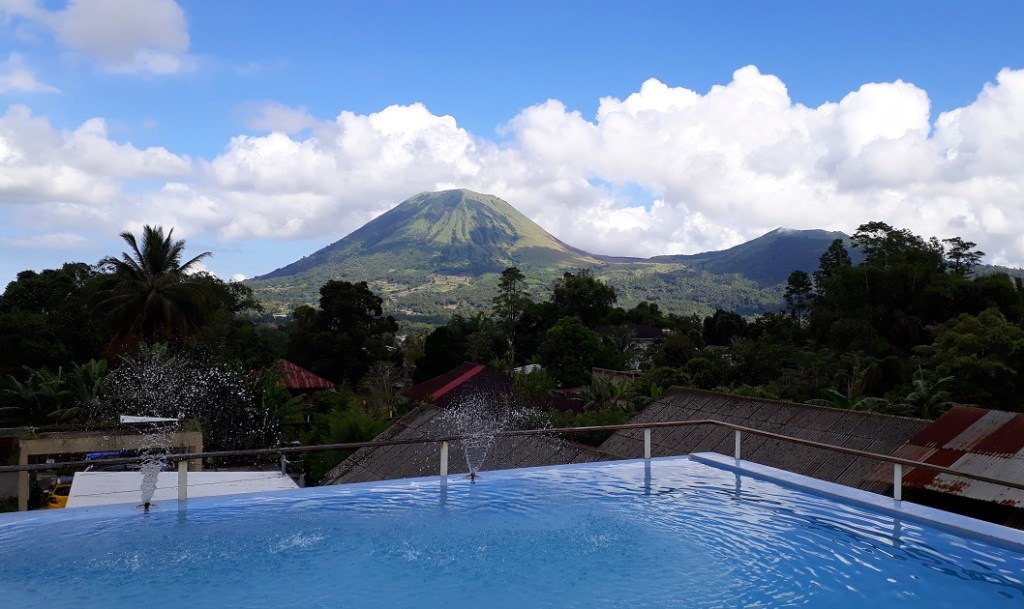
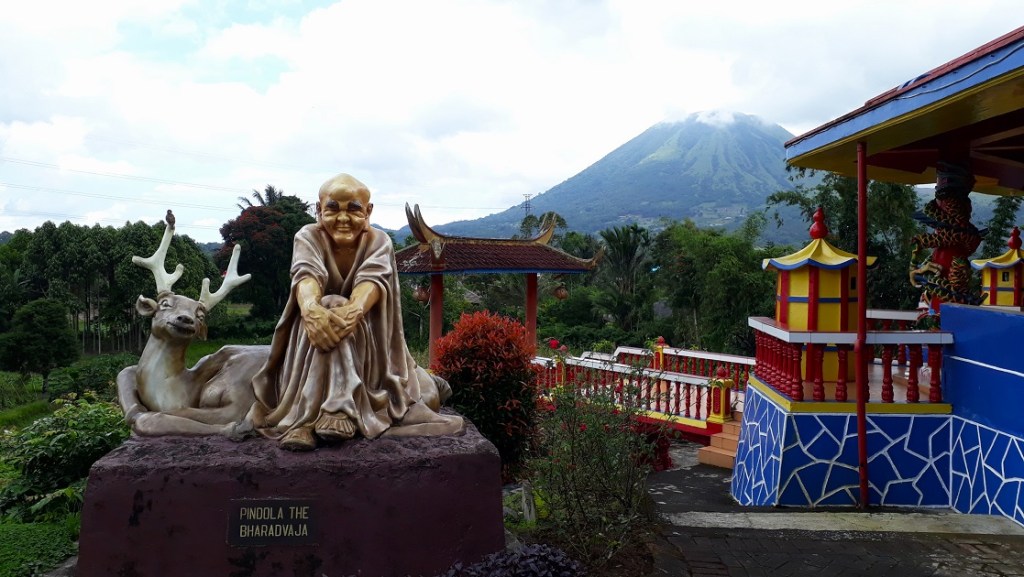

Outside of town, you’ll find plenty of hiking, waterfalls, incredible views, and the largest lake in the area is also very close by. Kakas is a subdistrict and a small village in Minahasa Regency. In my language, Minahasa sounds similar to the word mihaszna (meaning reprobate) – only minahasa means here to become one. However, kakas means rooster in my language, and let me show how crazy the etymology is:
According to folklore, in the 15th century, there was a long dry season, which resulted in a water shortage. At that time, people were afraid to take water from Lake Tondano because of the presence of wild animals. They then heard a rooster crowing and scratching on the Rinerejan hill. The result of the chicken scratch is a hole that releases water. Kakas is an abbreviation of the words Ka’kasen or Ki’na’kas ni ko’ko, which means the one scratched by the chicken. To make it easier to pronounce, it is abbreviated as Kakas or, in other words, Ka’kas.
Isn’t it cool?! I love silly reasons for picking my travel destinations, and they usually surprise me even more.
The region is home to many waterfalls. Some are more difficult to reach than others, but most are worth a visit. First, I went to Air Terjun Tincep (well-developed and touristy but still stunning), which is close to Sonder (another interesting name for a settlement).
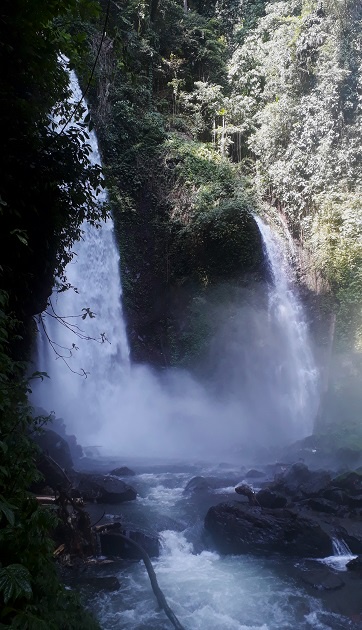
And also hunted down Air Terjun Kali. I say hunt because it wasn’t easy to find. There are no real signs; you must stop at Waruga OPO MAMARANGBENE, park your bike at the local’s house, and they will point you in the direction. After a 20-minute jungle trek, you’ll reach the waterfall – the rushing water and mossy stones in the dense jungle are not bad.
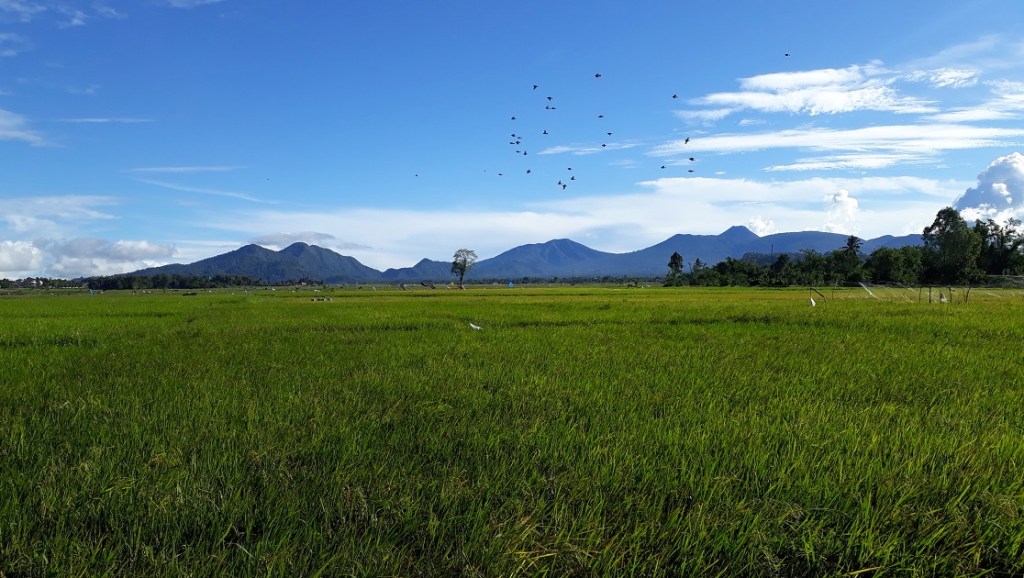

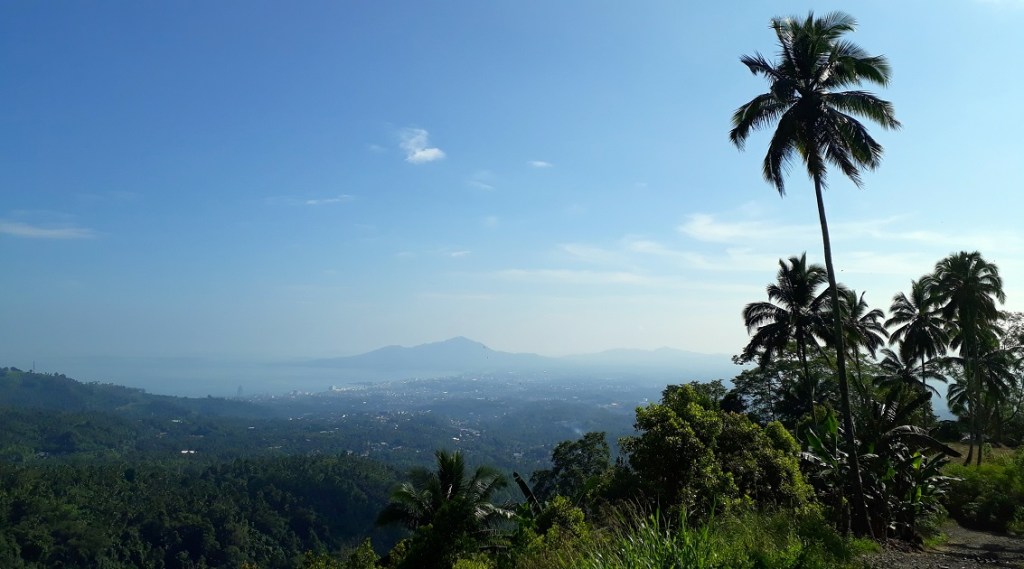
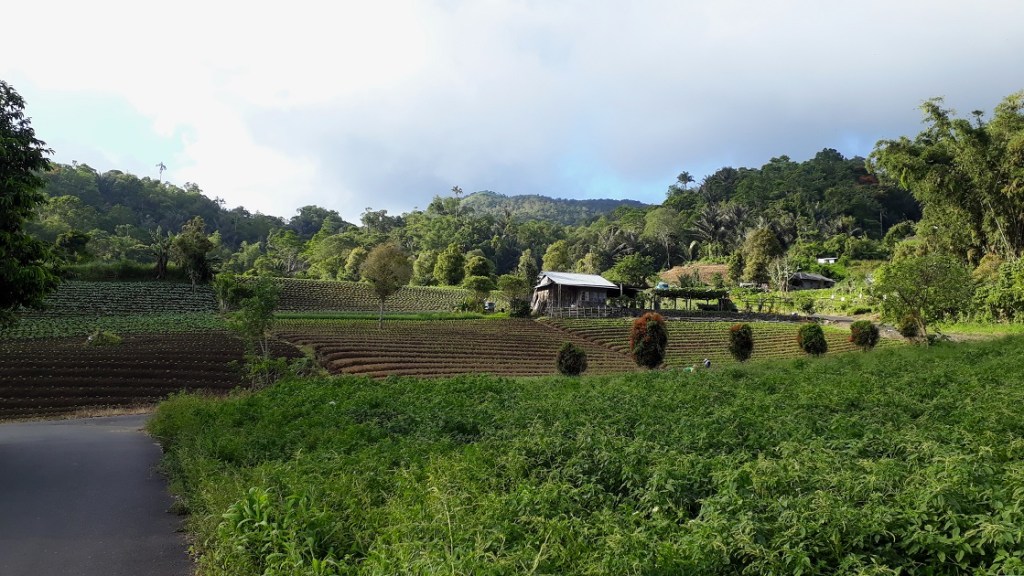
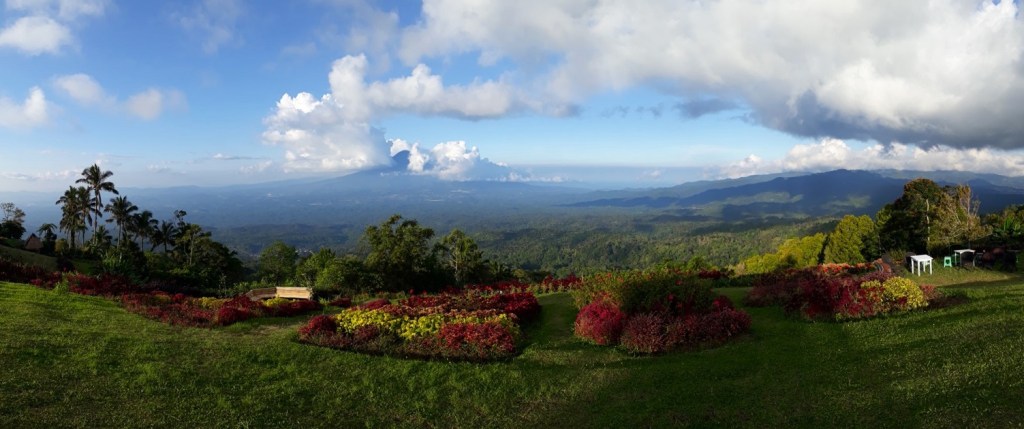
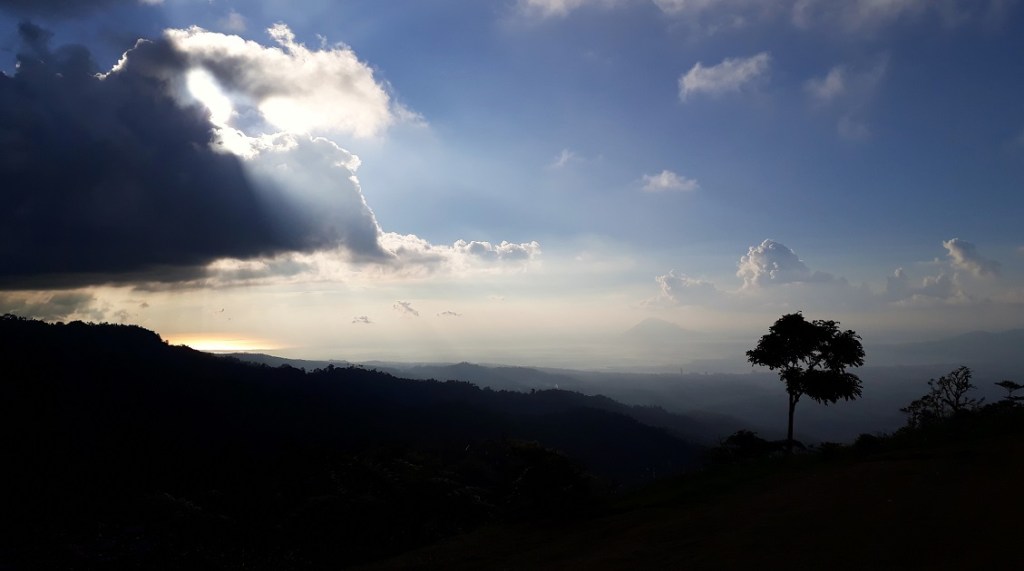
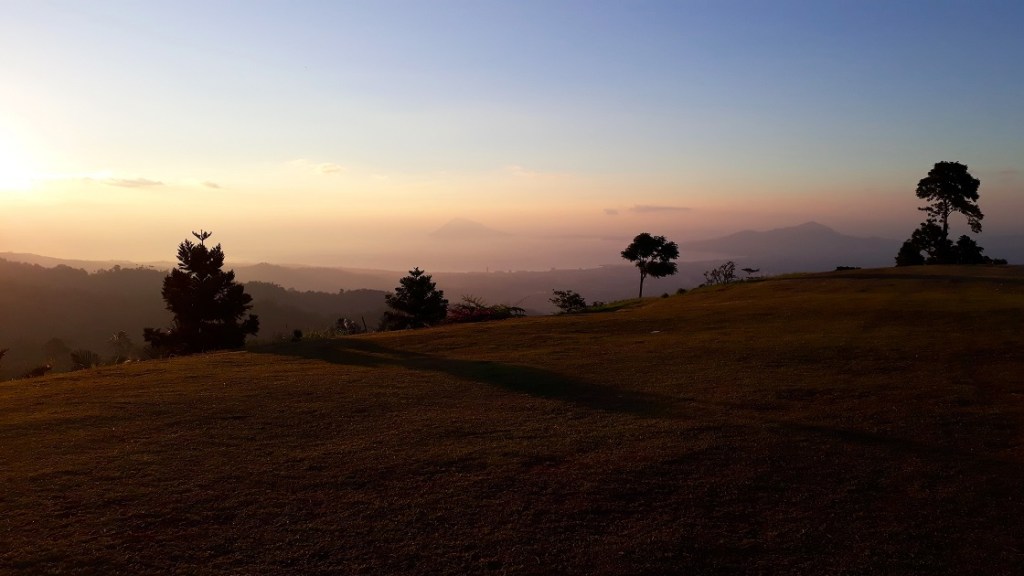
Last but not least, my absolute favourite spot was Tetetana Kumelembuai. This mountain peak will leave you speechless. The best time to visit is sunset, but sunrise works well, too, because of the 360-degree view. I was not prepared for what awaited me here – I just drove up the rocky road, and my jaw dropped. On one side is Mount Klabat (the highest volcano in Sulawesi), and on the other is Manado Bay. Plus, the volcanic soil and temperate climate favour the beautiful flowers and vegetation, making the place a feast for the eyes. And while you enjoy the sunset, try the klepon (called onde-onde here) and grab a hot tea because it’s pretty cold up there.
TANGKOKO
Tangkoko Nature Reserve, with its diverse flora and fauna, is another well-known destination. It’s the habitat of tarsiers, black macaques, maleo birds, cuscus, hornbills and many more.. in my reading, that means you can see monkeys here. I’m not a huge fan, no matter how cute or unique they are considered, but because of the fame of the park, I still planned a half-day walk.
For lack of options, I slept at Tangkoko Jungle Homestay. The proximity of the jungle felt relaxing.. only the thought of tarantulas (yep, they live here too) was a bit disturbing. The fishing village didn’t sell the vibe either, so I moved on after the walk got cancelled (due to rain at sunrise when we were supposed to start). I wanted to take the scenic route back to Manado, but it was underwater or knee-deep in mud, so I had to drive on the main road (also pretty scenic). And that’s why I kinda like this area; the winding jungle road between Mount Tangkoko and Klabat is lovely.
Manado is called the Land of Smiling People. Honestly, I don’t know. Maybe it was just the timing (I didn’t see many tourists in general), but I felt less comfortable, and people stared more than smiled at me. If I had to choose between South and North Sulawesi, I would undoubtedly vote for South. Nevertheless, the Manado area has its treasures and should be on your travel list.
 The Flux in PARADISE
Comment